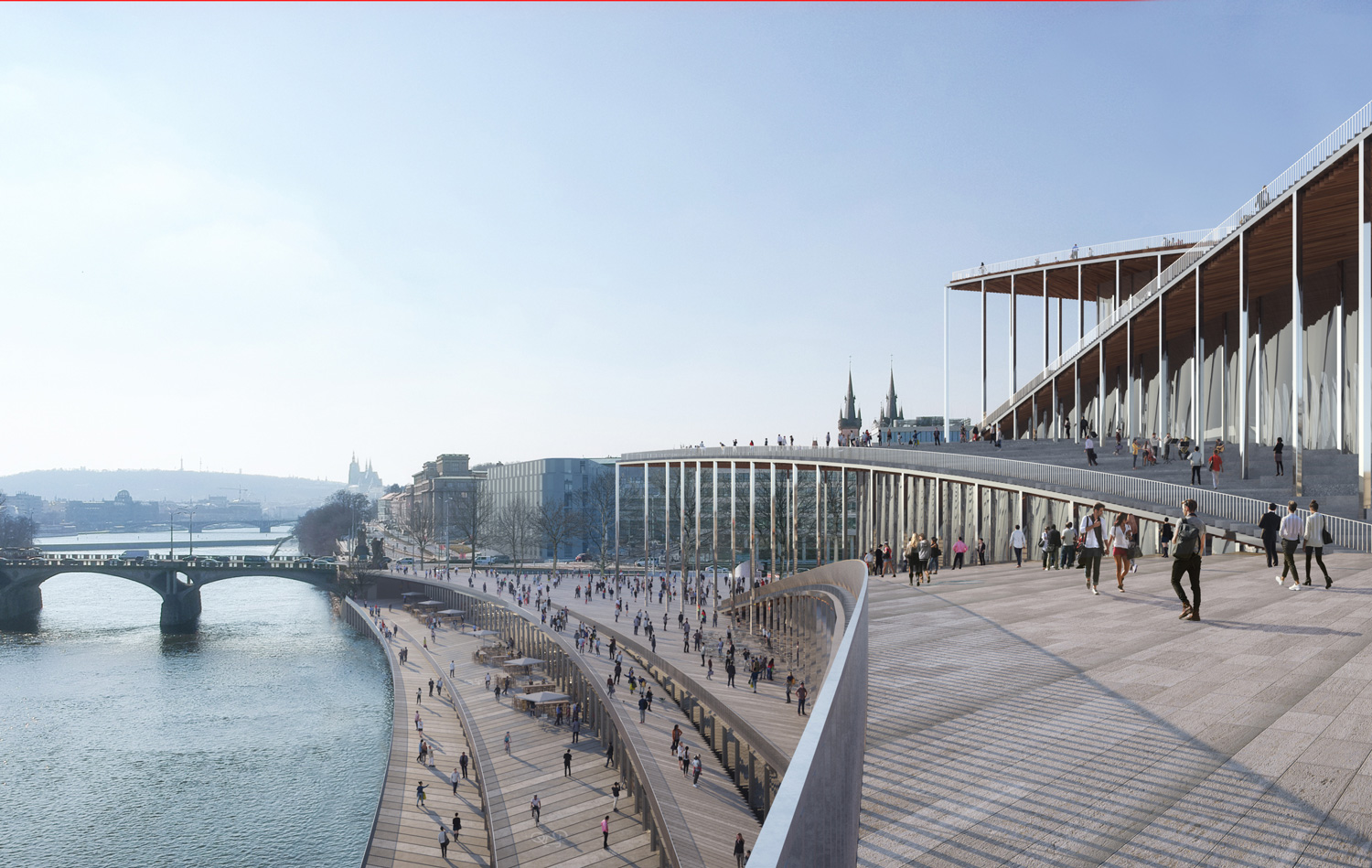
Supporting the transformation of a neglected area into a well-connected, accessible, and prestigious urban development
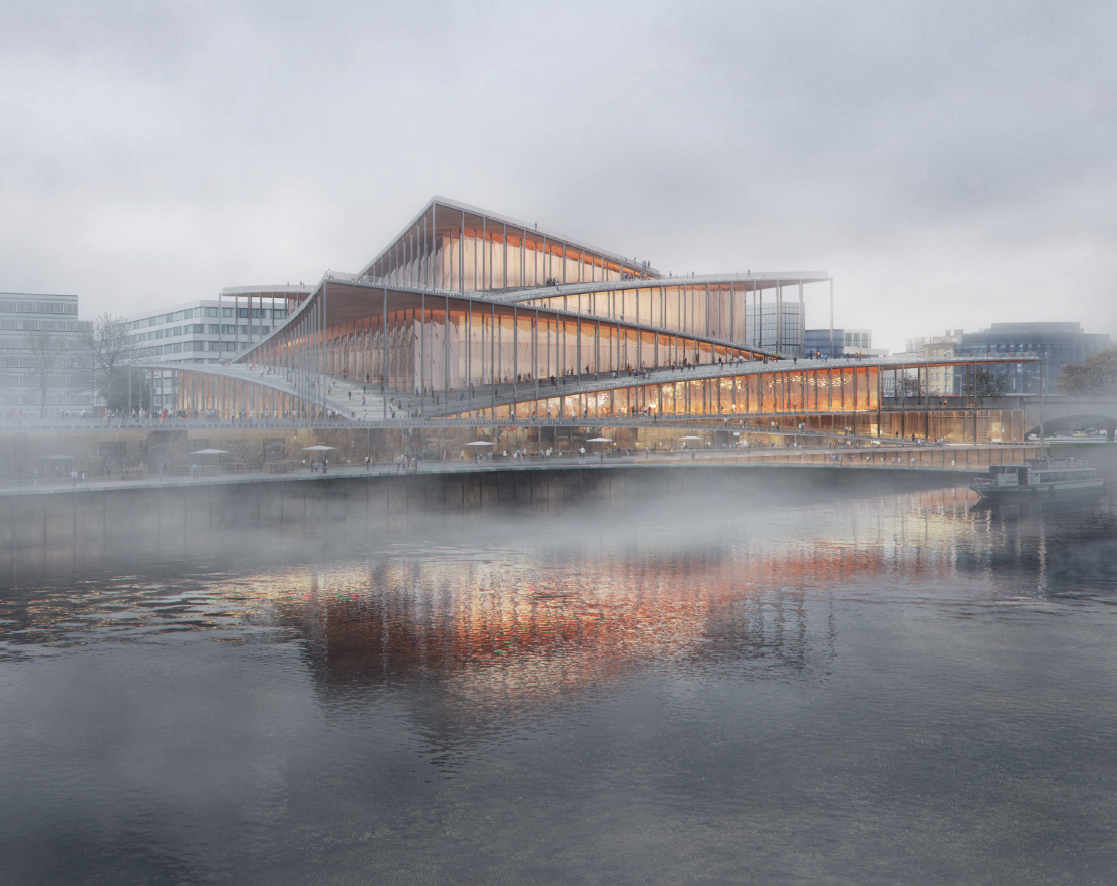
The future Vltava Philharmonic Hall is set to become one of the Czech Republic’s most significant cultural landmarks and a new symbol for the city of Prague. Designed as a world-class music and cultural destination, the development will include concert halls, a creative hub, a music library, hospitality functions, and publicly accessible terraces overlooking the Vltava River.
Located within the Vltavská area, the project also plays a strategic urban role in supporting the regeneration of the Holešovice Bubny-Zátory brownfield district, transforming a former traffic-dominated junction into a vibrant and highly connected public destination.
Historically characterized by heavy infrastructure and fragmented public space, the Vltavská area required a comprehensive accessibility and mobility strategy capable of reconnecting the district with the riverfront and surrounding neighborhoods.
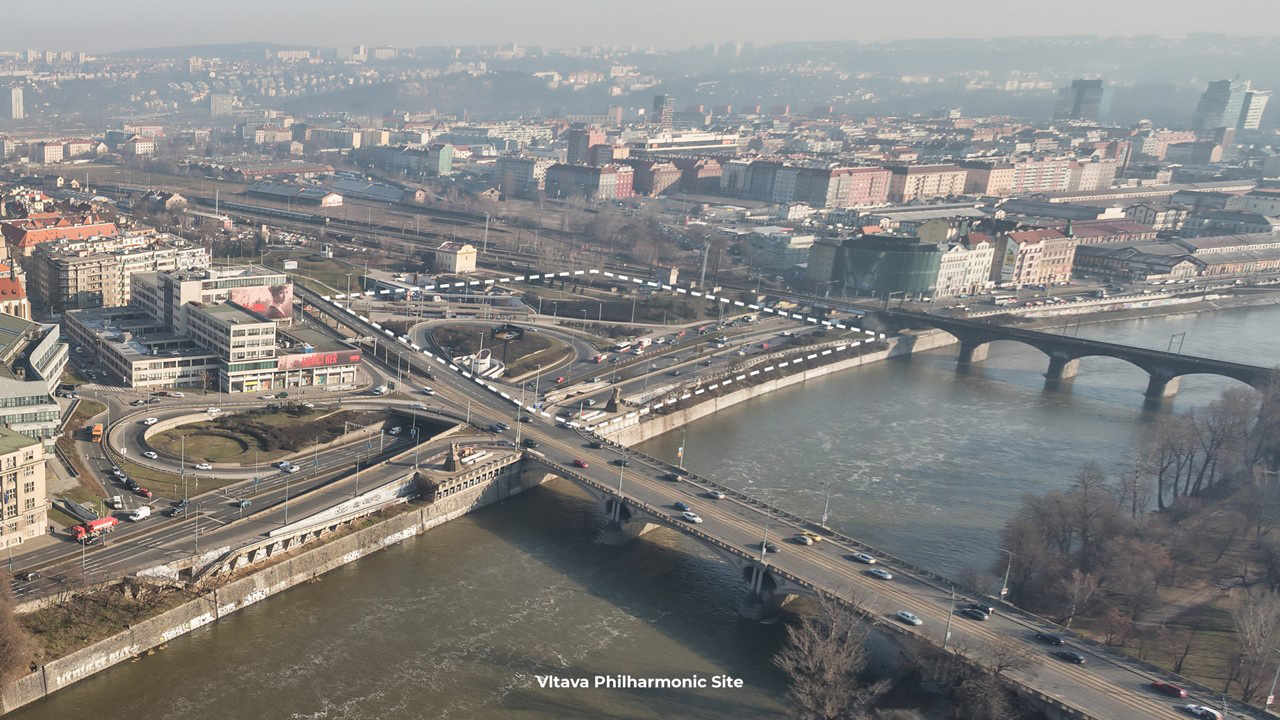
Systematica supported Bjarke Ingels Group (BIG) during the competition phase for the Vltava Philharmonic Hall by leading the transport, accessibility, and pedestrian flow assessment activities.
Our approach established a multilayered accessibility system that clearly separates vehicles and pedestrians while emphasizing seamless integration with public transport, improving safety and delivering an intuitive visitor journey across all transportation modes.
A key component of the strategy involved the reconfiguration of the vehicular circulation system between Hlávkův Bridge and Kpt. Jaroše Street, facilitating an extension of the public realm toward the waterfront without conflicts with traffic.
Systematica developed an integrated mobility and accessibility framework designed to prioritize public space quality and multimodal connectivity.
The strategy focused on improving integration between metro, tram, bus, ferry, cycling, and pedestrian networks through the expansion of the public realm and the downgrading of existing traffic infrastructure.
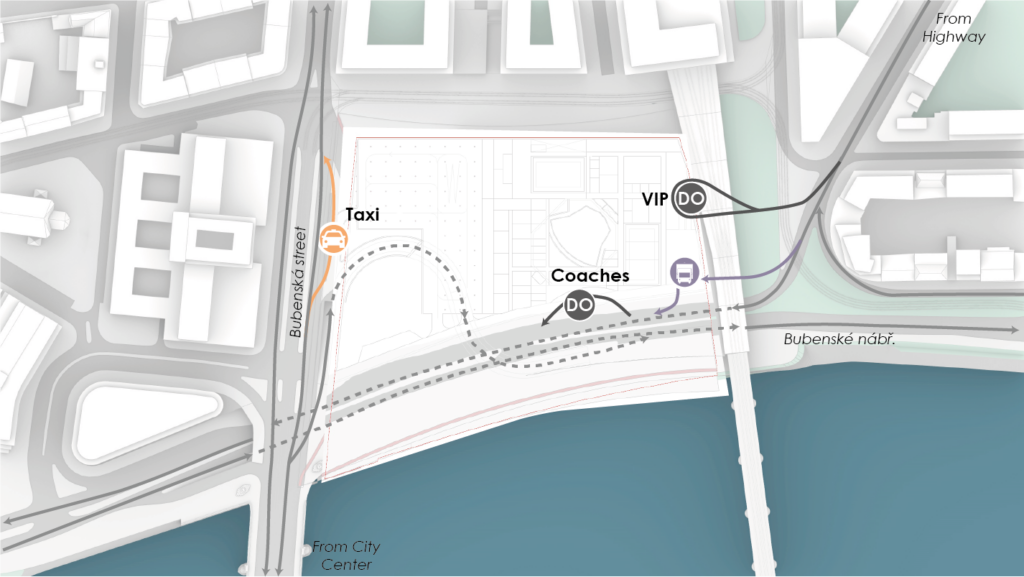
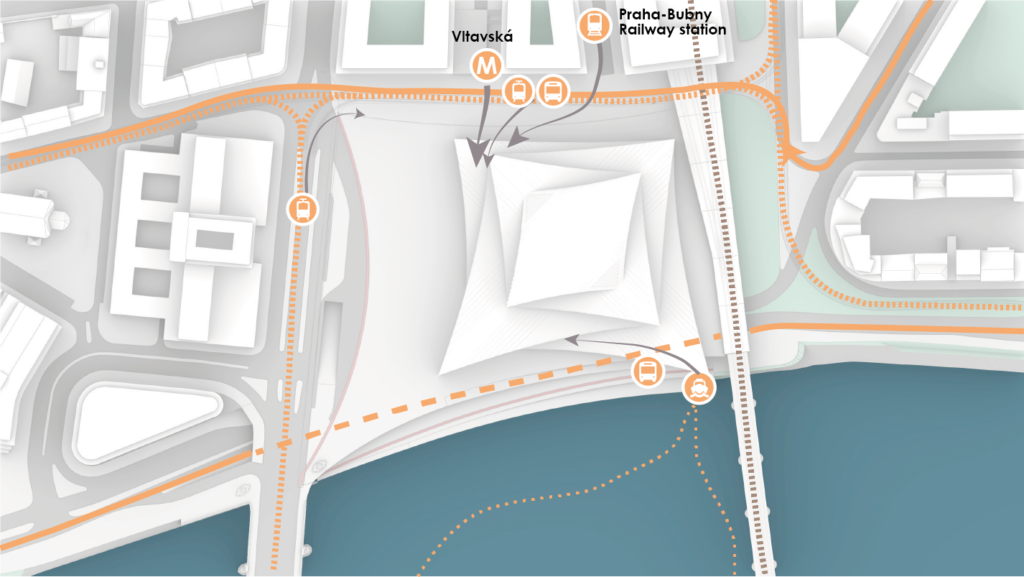
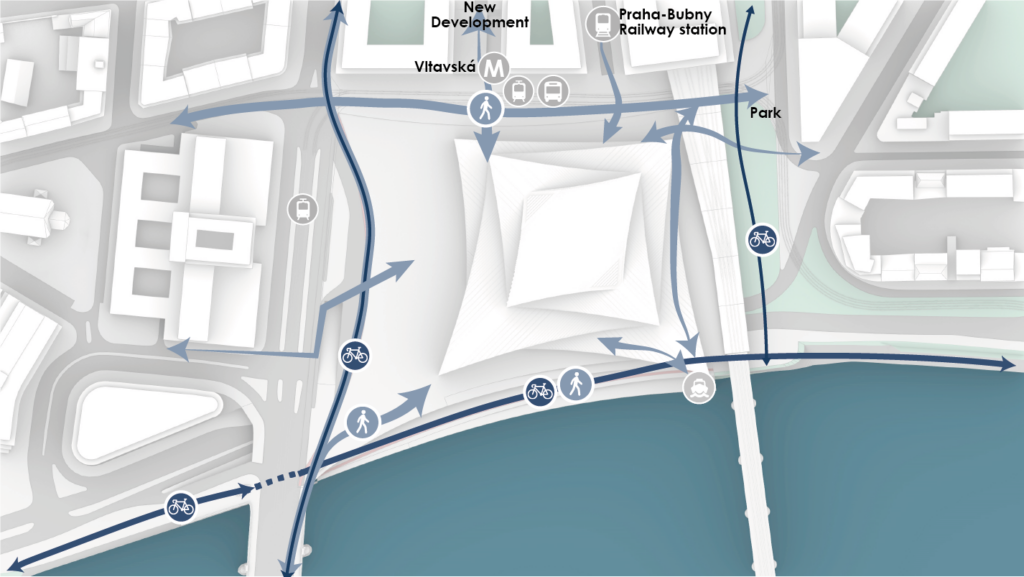
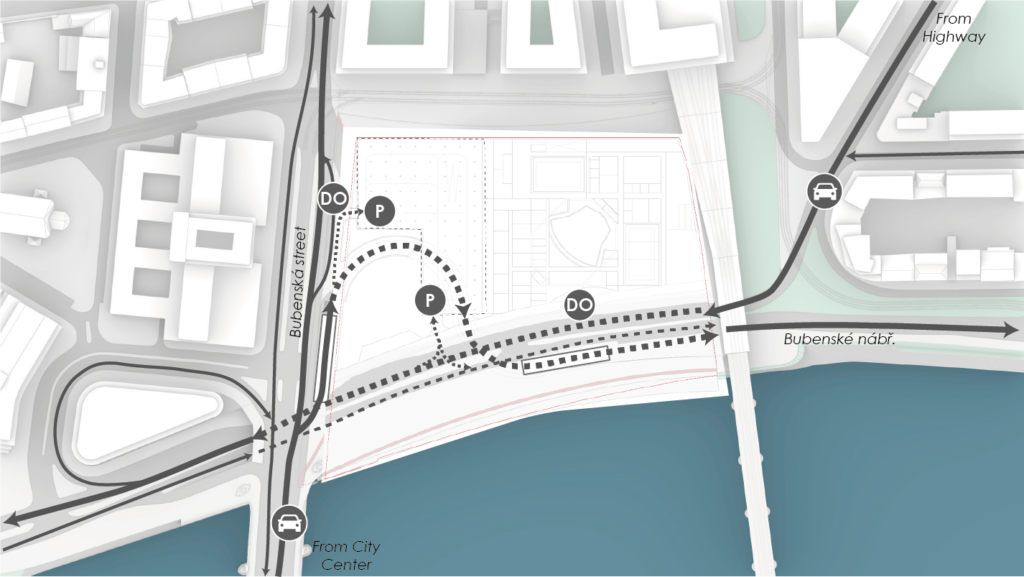
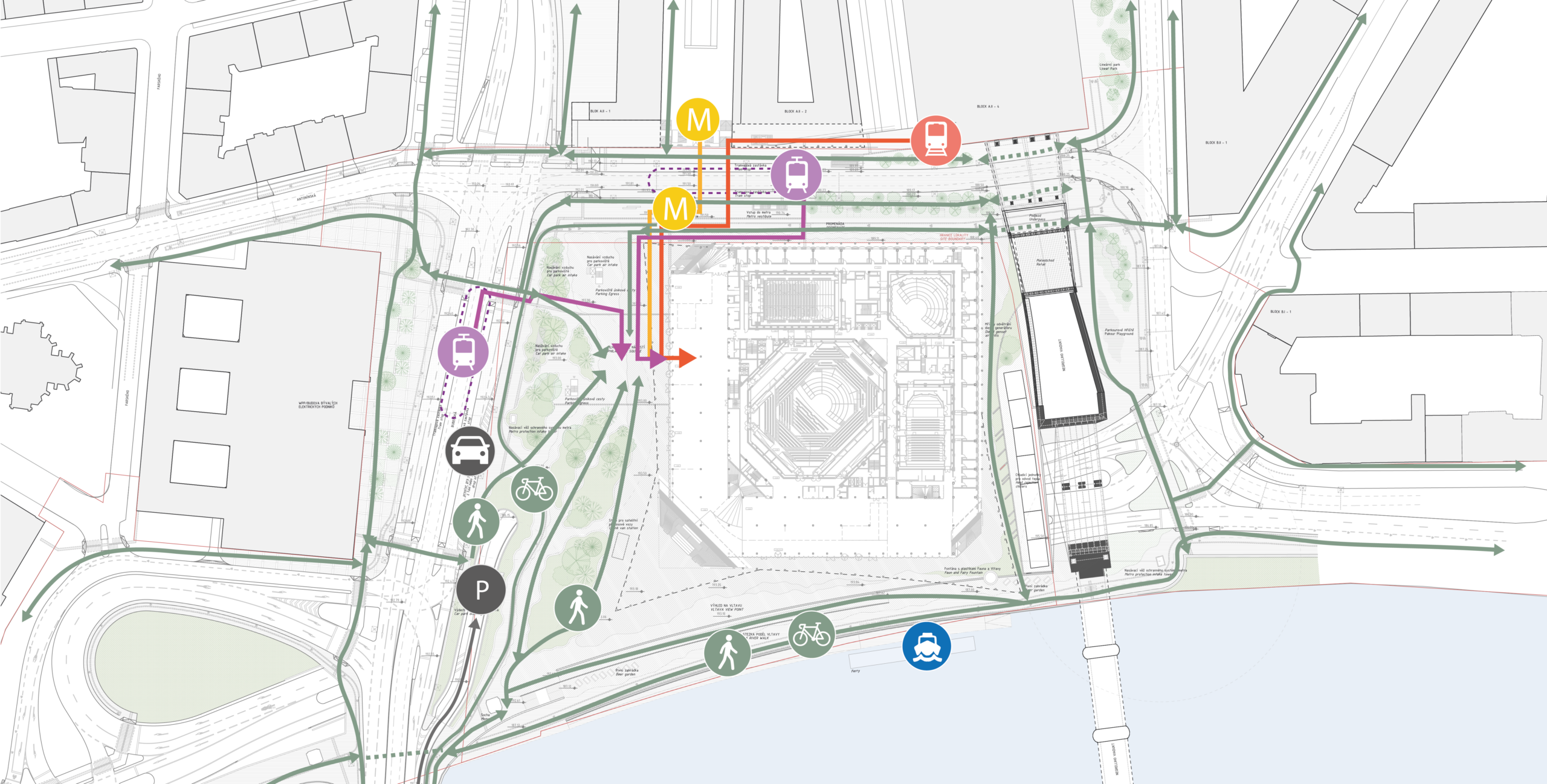
The analyses took into consideration vehicular accessibility, soft modes accessibility, public transport integration, and connectivity with other transport modes.
Systematica’s pedestrian flow assessment and accessibility strategy contributed to the creation of a highly connected and people-oriented mobility framework for one of Prague’s most important future cultural destinations.
Key interventions included:
- Uninterrupted pedestrian access to the waterfront through the introduction of a public square over the roadway
- Stronger connection to public transport by downgrading the roads
- Direct pedestrian connections between the metro station and the main public square
- Continuous cycling infrastructure along the waterfront
- Dedicated access systems for logistics, VIPs, coaches, and service operations
- Redistribution of vehicular access points to reduce conflicts with pedestrian flows