Advancing multimodal accessibility for the Bergamo Porta Sud urban regeneration plan
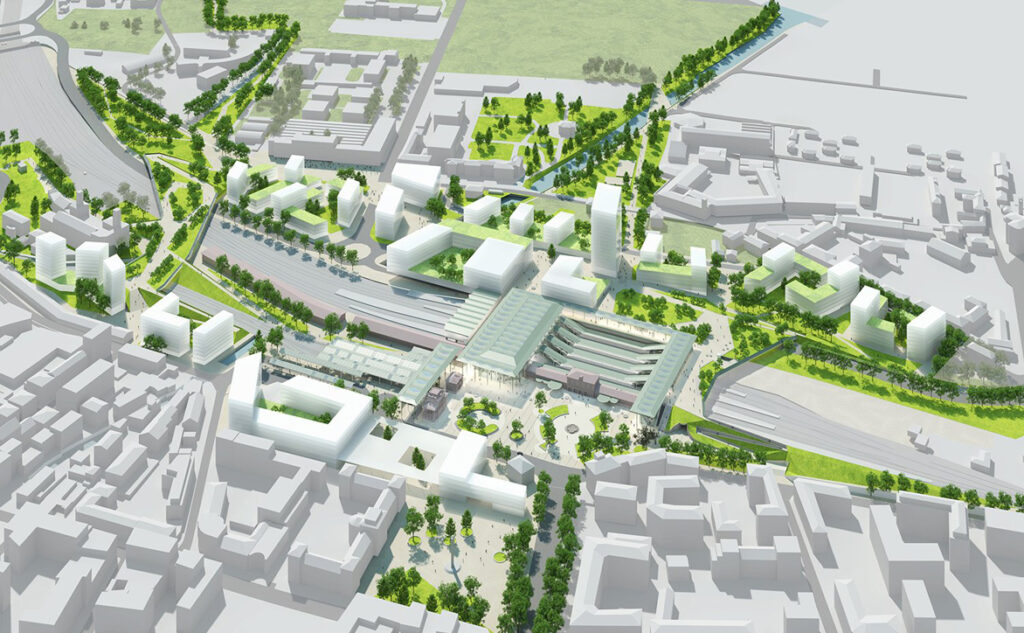
The urban regeneration process of Bergamo Porta Sud started more than ten years ago with the ambitious goal of generating a new urban polarity for the city. The master plan combines a complex functional mix, high levels of accessibility and significant endowment of technology and innovation.
Closely linked to Bergamo’s railway station, tram and BRT systems, bus services and micro-mobility stations, the regeneration of Porta Sud is conceived as a new urban district and a fully integrated Transit-Oriented Development (TOD).
The project strengthens connections between the historic city center and southern districts while overcoming the physical barriers historically created by the railway infrastructure. This approach, coupled with direct railway connections to Milan and Milano-Bergamo International Airport, further positions Porta Sud as a major multimodal gateway at regional scale.
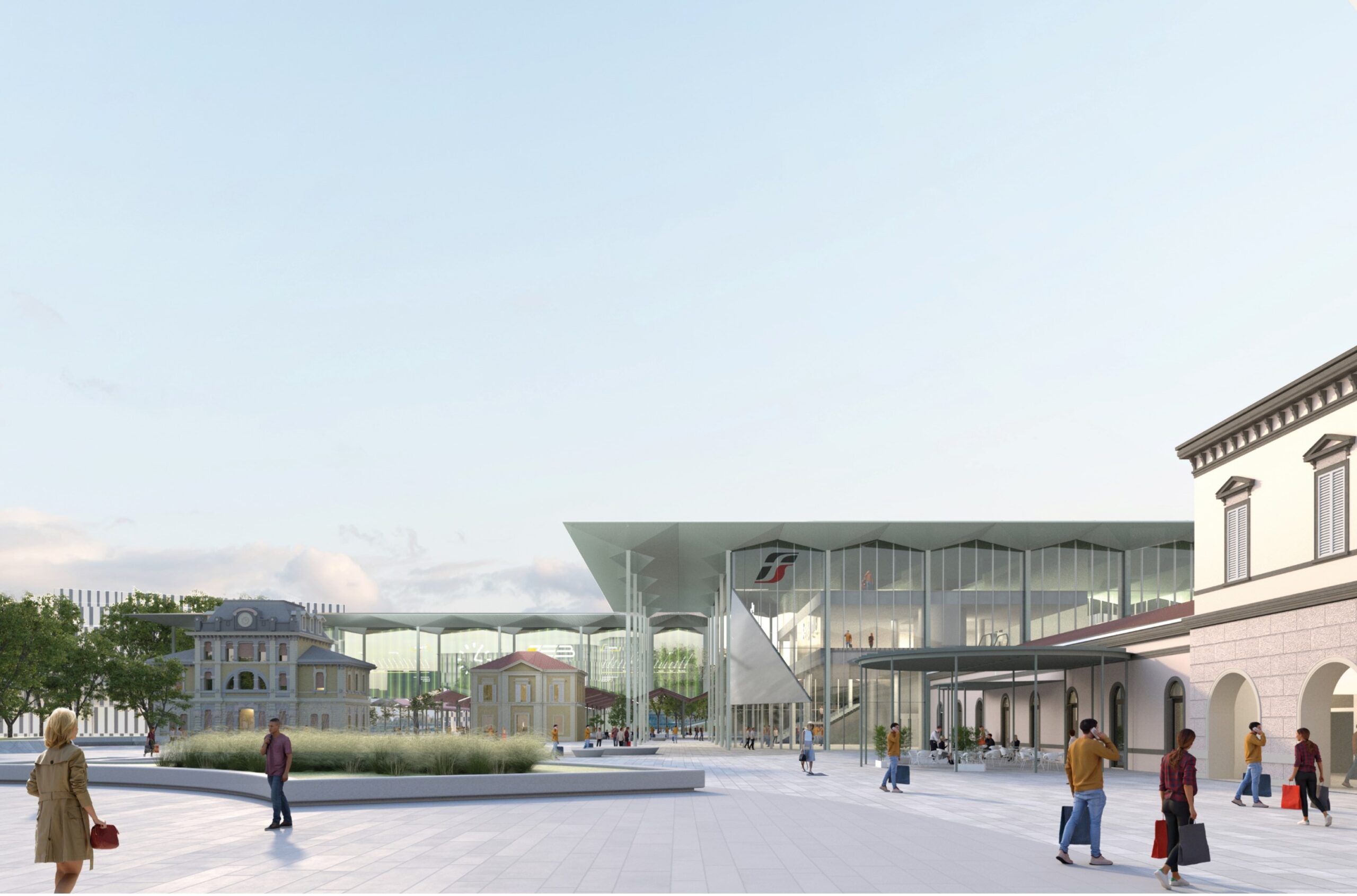
Systematica worked closely with Vitali S.p.A., the promoter of the urban operation, and played a pivotal role in developing the mobility study for the project.
The proposed strategy aimed at enhancing multimodal accessibility, considering the needs of multiple users, and ensuring seamless transitions between diverse transport systems, thus fostering community vibrancy.
Systematica developed a comprehensive analytical framework combining demand forecasting, mobility modelling, and multimodal network planning.
The study included:
- Demand estimation, with a focus on population and trip generation
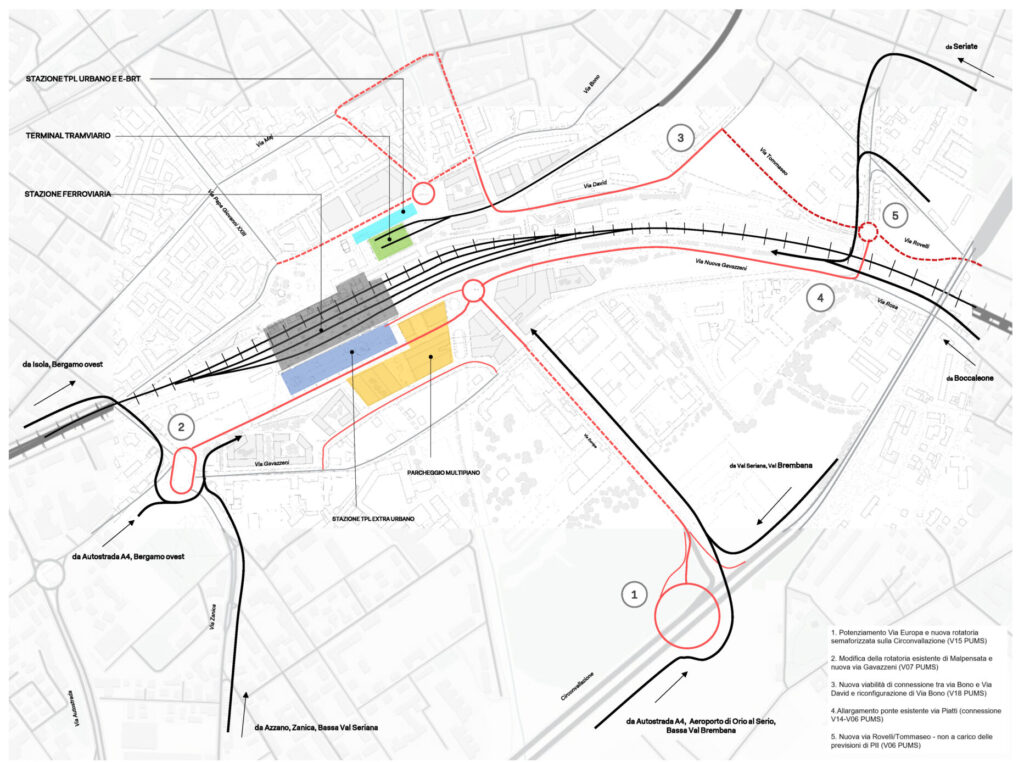
- Public transport, micromobility, and vehicular network development
- Traffic modelling and road network verification
- Pedestrian flow simulations and route analysis
- Junction and roundabout operational simulations
The compact urban structure was designed around a permeable and walkable street network prioritizing active mobility and collective transport systems over private vehicle use.
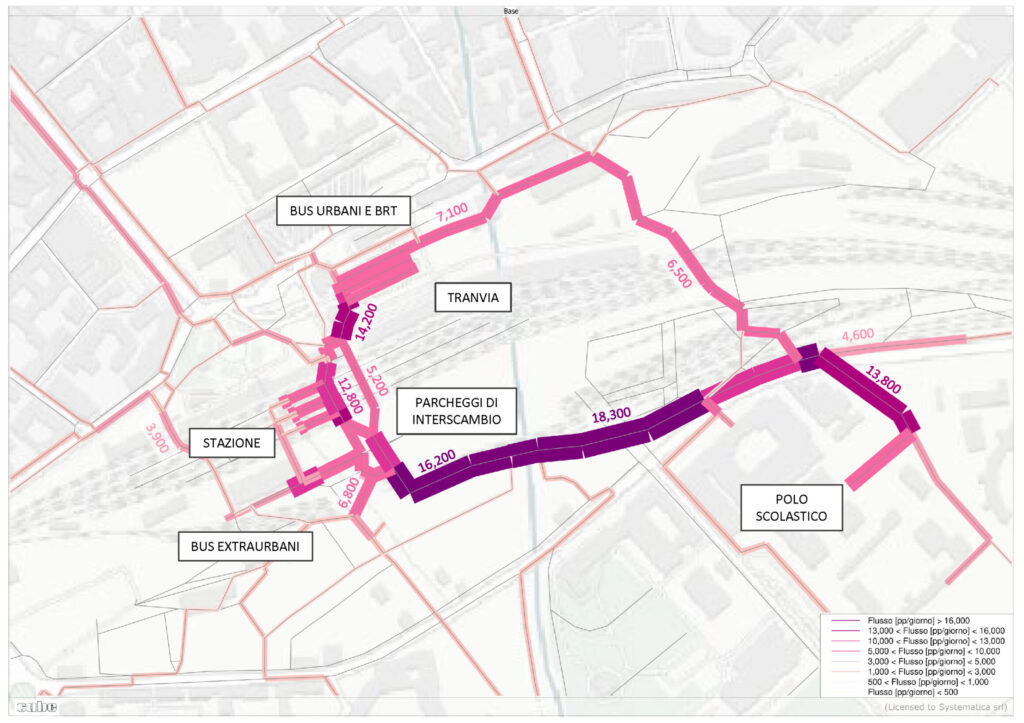
Particular attention was given to the integration of innovative mobility technologies through a MaaC (Mobility as a Community) platform, enabling seamless access to multiple mobility services and supporting future implementation of experimental systems such as autonomous and on-demand mobility solutions.
The goal was to create a well-designed network of interconnections among a broad range of mobility services and solutions centered around the interchange hub. This approach contributes to the overall quality of the public realm by ensuring permeability and safety throughout the development and within surrounding urban districts.
Systematica’s work contributed to transforming one of Lombardy’s largest brownfield sites into a sustainable, people-focused neighborhood.
The development will generate 95,000 expected total public transport daily trips through the multimodal hub by 2030, plus: