Reimagining San Francisco’s major thoroughfare to create a walkable and bike-friendly urban environment
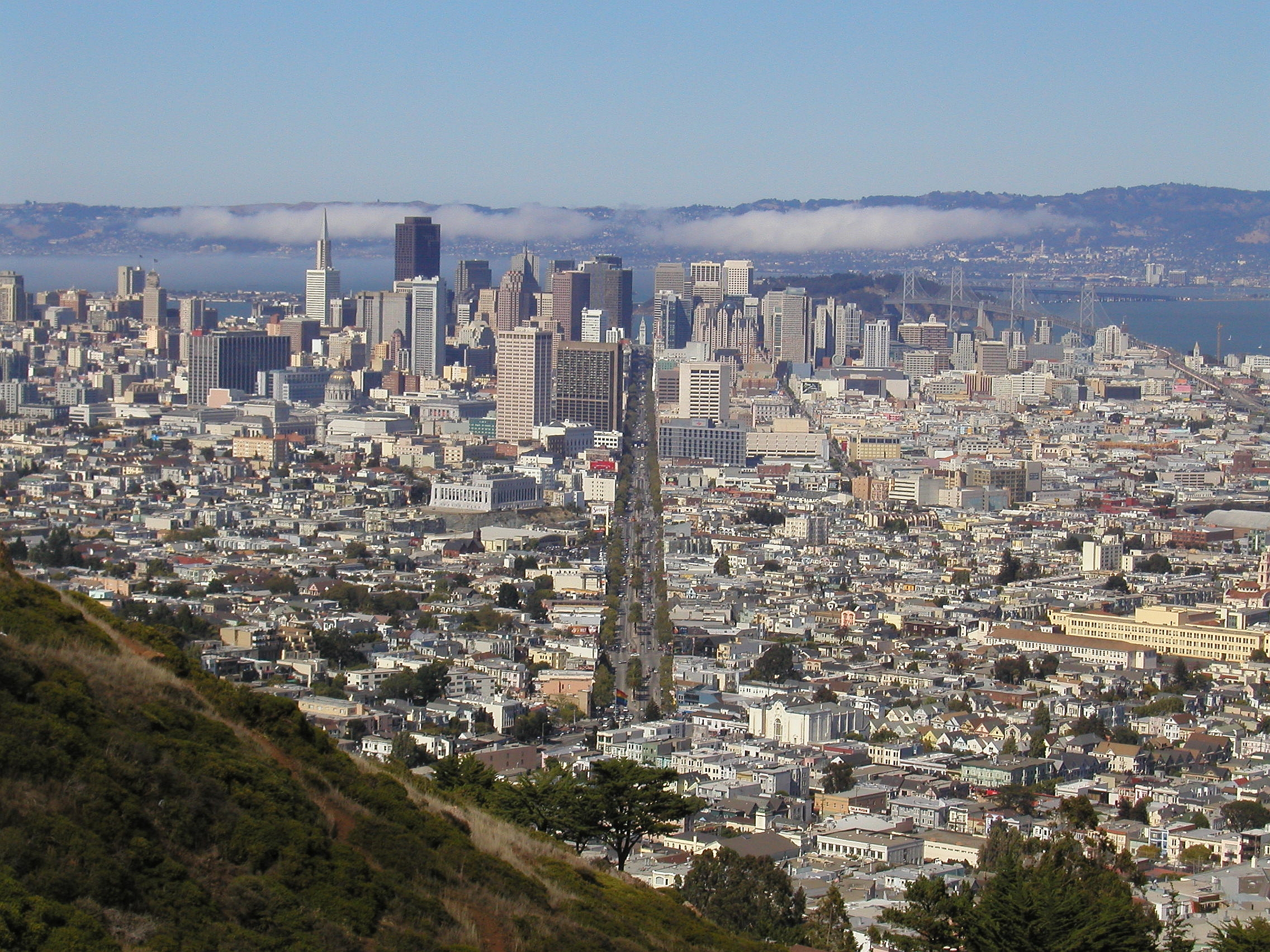
The Urban Land Institute (ULI) launched an international call for ideas to reimagine San Francisco’s Market Street as a resilient, people-oriented urban corridor capable of responding to the profound transformations affecting city centers after the Coronavirus pandemic.
The initiative addressed the evolving challenges generated by remote work, changing mobility behaviors, and shifting patterns of public space use. The call asked multidisciplinary teams to envision new strategies for creating economically vibrant and experientially engaging downtown environments.
As San Francisco’s primary civic and transportation spine, Market Street is historically one of the most dangerous streets in San Francisco, especially for people walking and biking. Even today, Market Street is still on the city’s High Injury Network, the 12% of streets where 68% of traffic crashes occur.
That’s one of the reasons why Market Street requires a renewed urban vision capable of balancing accessibility, sustainability, public life, and multimodal mobility while enhancing the quality of the public realm.
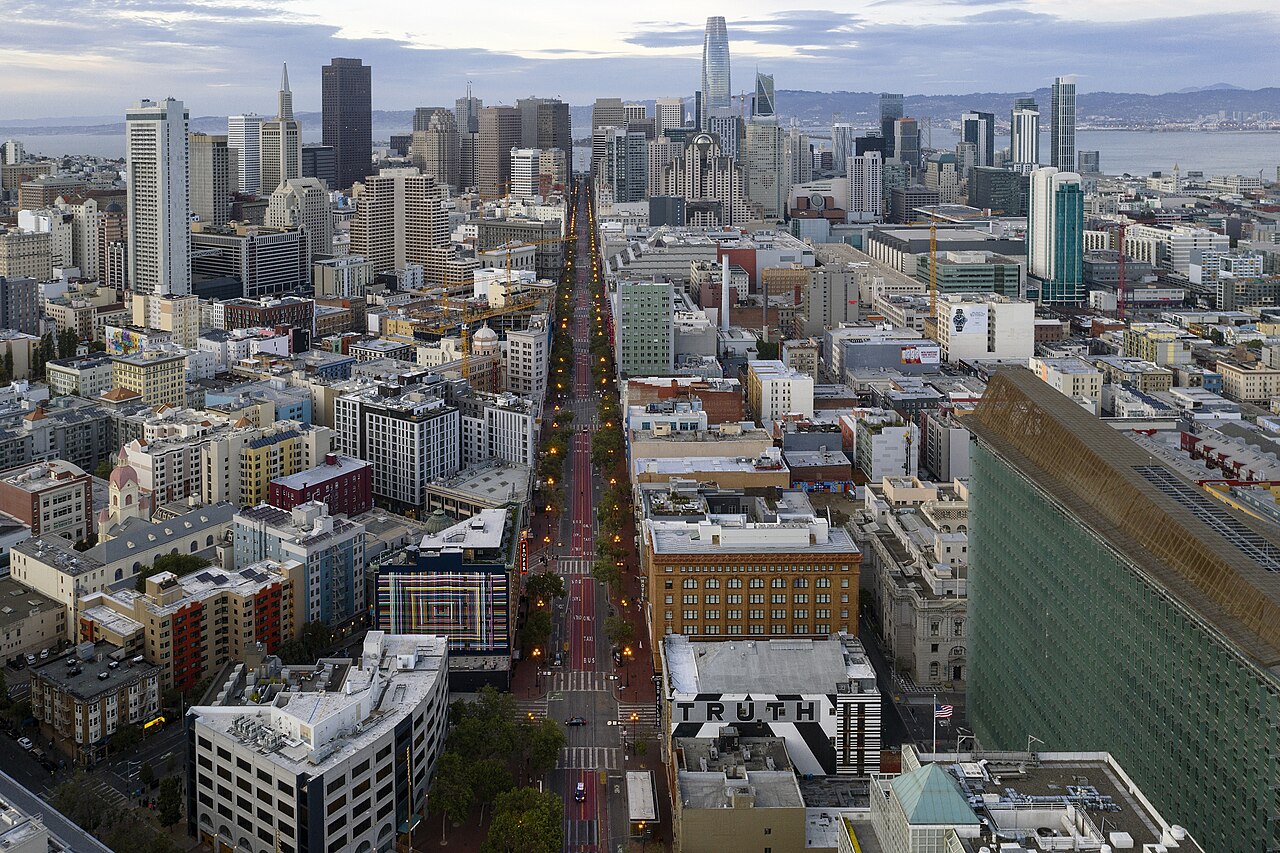
Systematica is partnering with Multistudio, Studio-MLA, and Vibemap, to develop an integrated mobility and public realm strategy for Market Street.
The proposal was selected as the winning entry of the international competition. Its key concept was turning Market Street into a destination, a civic commons where cultures, communities, and everyday rhythms converge, and not just a corridor to pass through.
The strategy focuses on reinforcing the transition towards a car-light street, through the creation of distinct urban nodes organized around four experiential themes:
- Civic & Culture
- Arts & Discovery
- Innovation & Collaboration
- Leisure & Well-Being
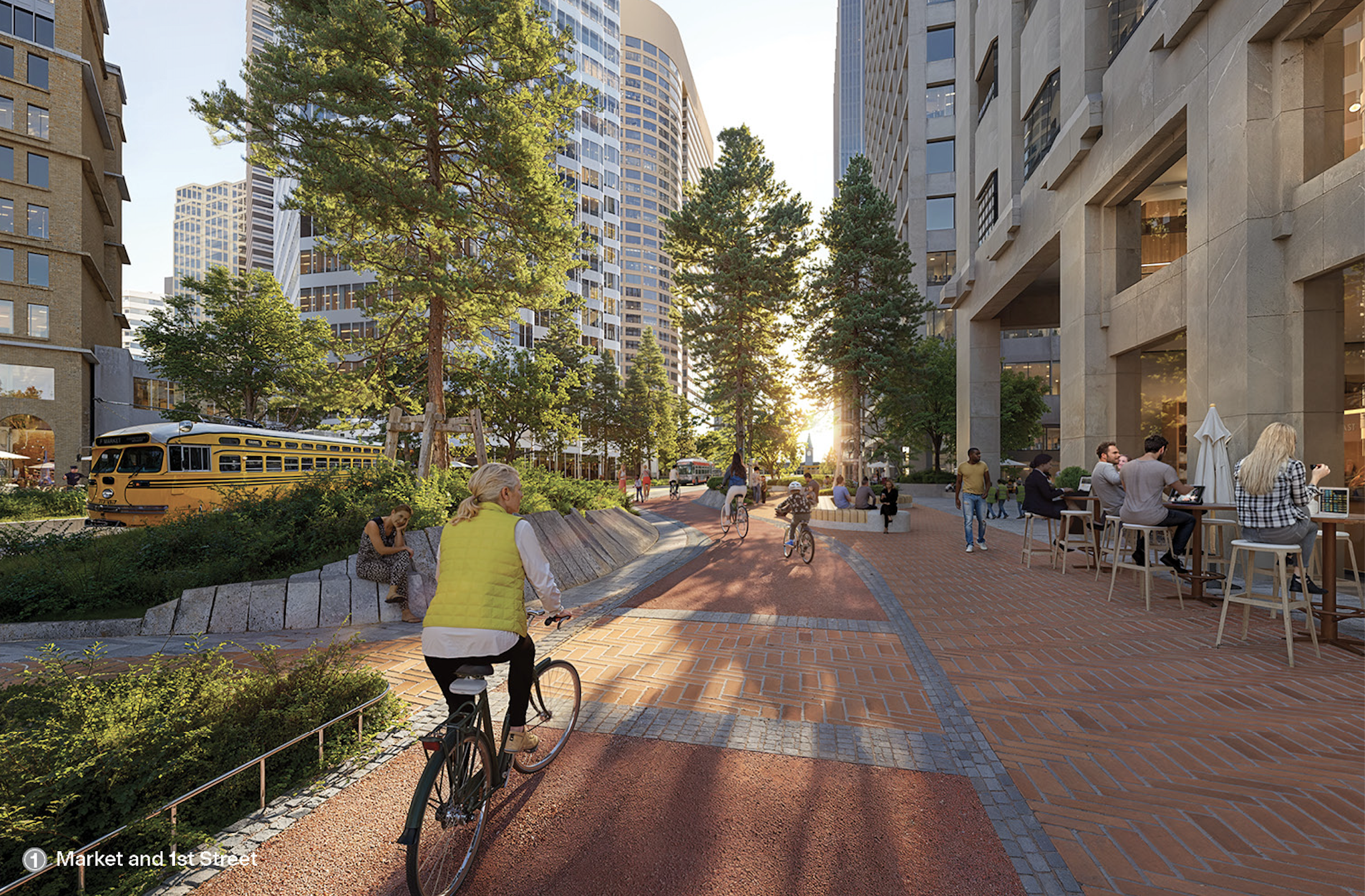
With private cars removed and people-first mobility prioritized, the street slows to a human scale. Designed for all ages and abilities, Market welcomes walking, biking, and rolling as joyful, everyday experiences. Movement, gathering, and reflection coexist under the trees’ canopies.
Native plants root the corridor in local identity, support biodiversity, and carry cultural memory forward. The planting palette restores texture, scent, and seasonality to the civic realm, grounding people in place and time.
In particular, Systematica’s transportation strategy includes:
- Rerouting public transport to minimize conflict with pedestrian and cycling flows
- Designing clear and legible pick-up and drop-off systems for ride-sharing services
- Enhancing sidewalks, pedestrian areas, and urban trails to create a more walkable and bike-friendly environment
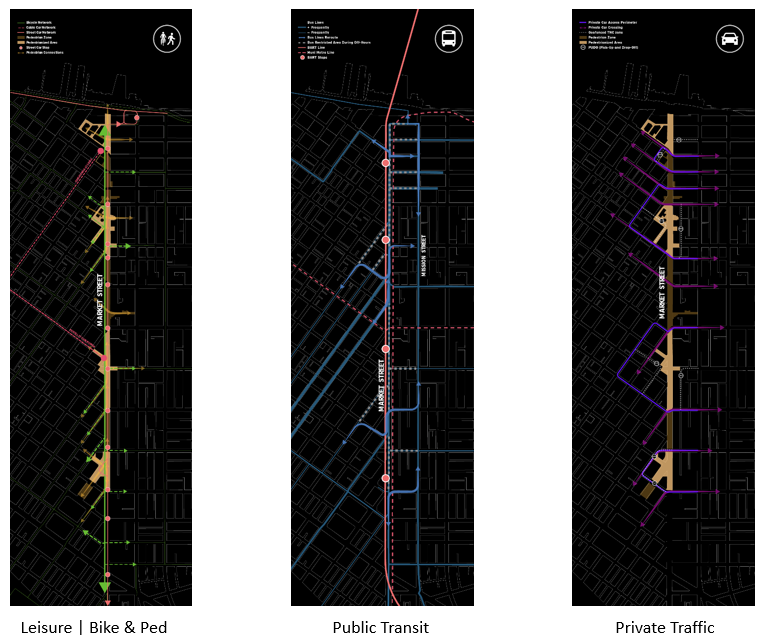
By combining mobility planning with public realm design, Systematica’s goal is to shape a more flexible and adaptive urban corridor capable of responding to evolving social, cultural and behavioral patterns post-pandemic.