Applying a transit-oriented planning approach to make Ronquoz a sustainable, accessible, and livable urban district

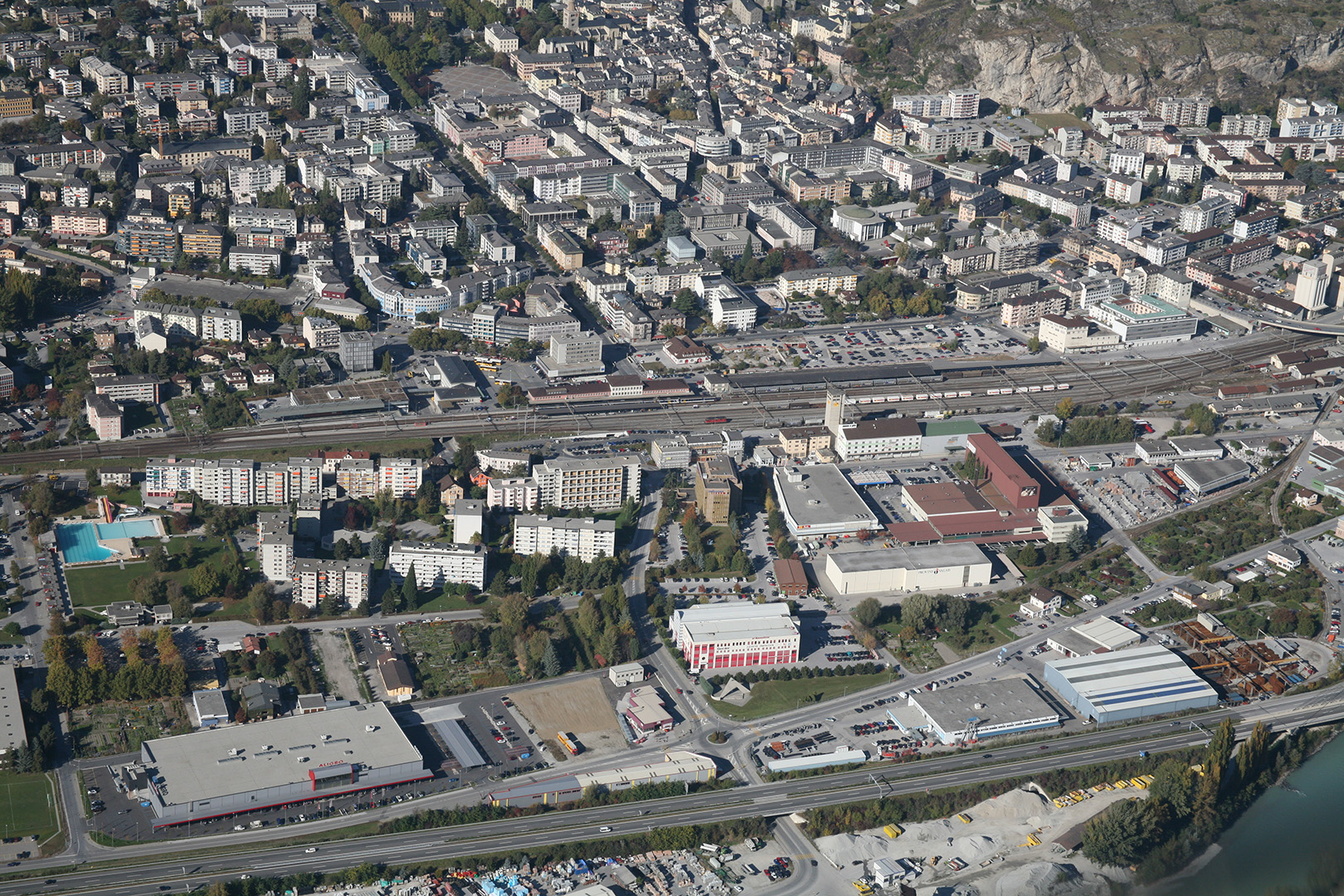
Ronquoz 21 is one of the most significant urban regeneration projects currently underway in Switzerland. The project involves the transformation of more than 60 hectares of former industrial land into a mixed-use, sustainable district designed to accommodate approximately 5,000 residents and 6,000 jobs by 2050.
Originally agricultural land and later developed as an industrial area, Ronquoz 21 is strategically located between the SBB railway lines, the Rhône River, and the A9 highway.
The district represents a major opportunity for the City of Sion to redefine its urban identity through innovative mobility solutions, high-quality public spaces, and a more sustainable urban model.
As part of the project team led by Herzog & De Meuron and in close collaboration with Michel Desvigne Paysagiste, Systematica developed the mobility strategy guidelines for the future district.
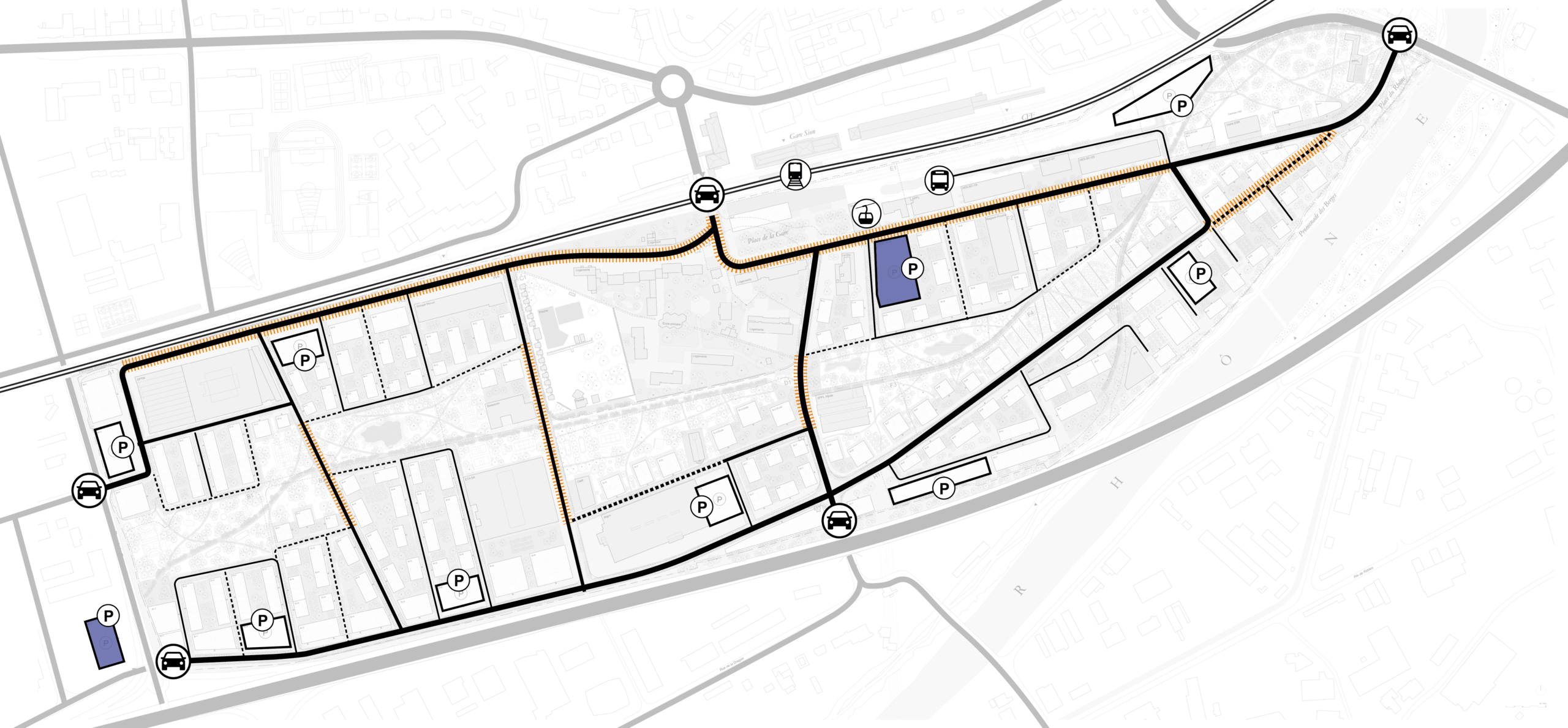
Our role focused on creating a traffic-calmed, pedestrian- and cycle-friendly district, designed to challenge the existing car-dominated urban structure and support a more sustainable and inclusive urban environment.
Systematica developed a multimodal and multilayered mobility strategy centered on Transit-Oriented Development (TOD) principles and strong integration between transport systems and public space.
The study included:
- Vehicular accessibility and circulation strategies
- Parking management and location planning
- Pedestrian-oriented and soft mode integrated public realm design
Particular attention was given to the development of a hierarchy of mobility hubs, including main, medium, and local hubs, to support seamless multimodal connections across the district and the wider urban area.
The mobility framework was designed to prioritise active mobility and collective transport while reducing the spatial and operational dominance of private vehicles.
Systematica’s work contributed to the creation of a forward-thinking mobility strategy supporting the transformation of Ronquoz 21 into a highly liveable urban district.
The proposed strategies support:
- Significant reduction in car dependency and traffic
- Enhanced pedestrian and cycling accessibility
- Improved integration with regional public transport systems
- Rebalancing of public space toward collective and soft mobility
- Creation of a more resilient and people-oriented urban environment