Improving parking efficiency and soft mobility in Ridge Hill’s mixed-use development
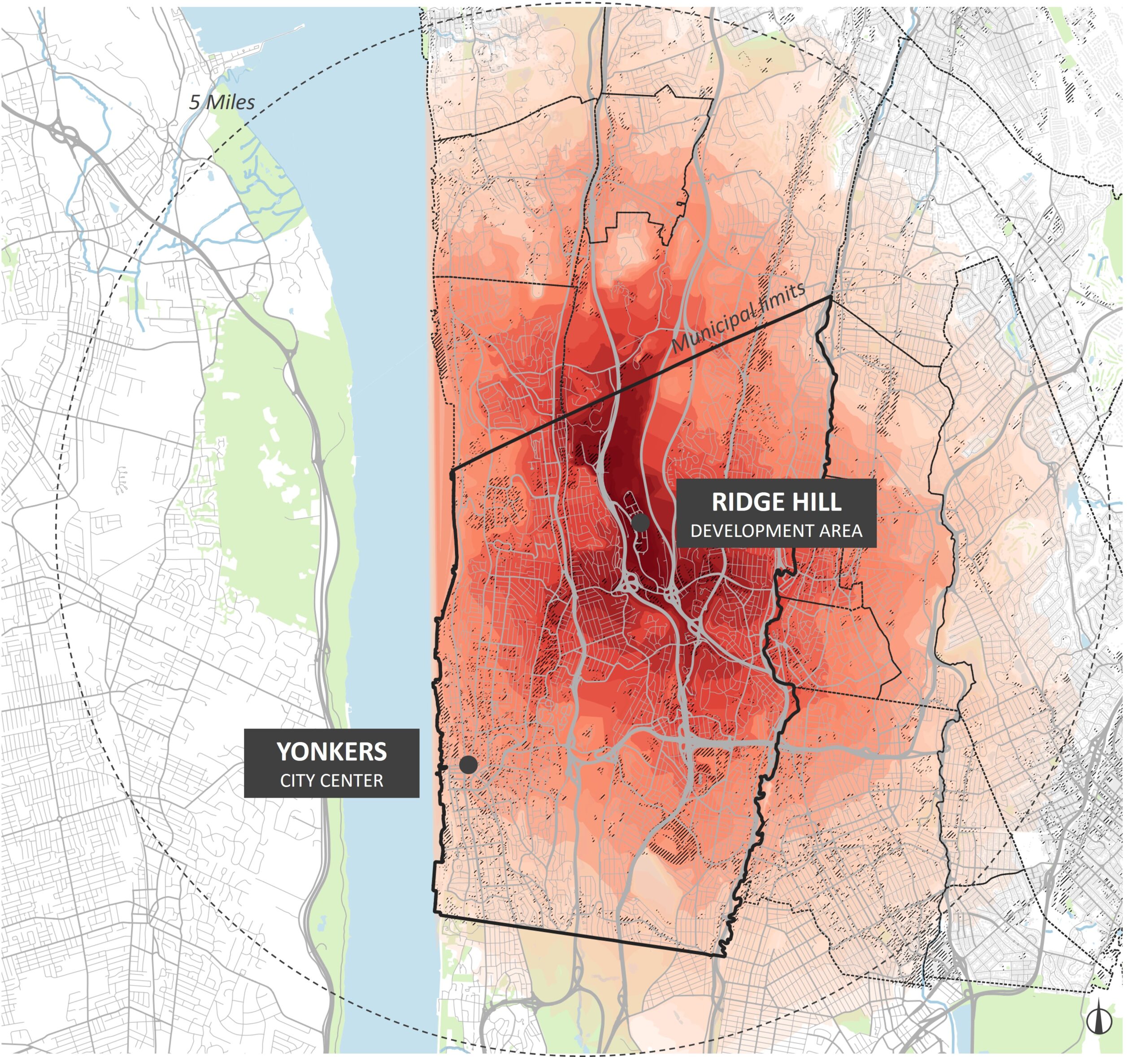
Ridge Hill Master Plan is a project aimed at revamping a mixed-use development, mainly composed by retail and office land use, located in Yonkers, State of New York, USA. The development is object of a twenty-years phasing renovation intended at reconfiguring the whole area, by adding residential and cultural functions, and by improving the overall user-experience with identifiable district and the pedestrianization of main retail streets. The objective of the project is to transform a fragmented shopping mall, accessed mainly by private cars, into an organic development, where soft-mobility would be the main mode of internal movement. In this framework, the circulation and the parking strategy plays a major role in the planning process, since with the added square footage, the existing parking provision could not accommodate all the demand.
The temporary nature of the artwork, combined with its global visibility and free access, required a highly adaptive mobility and crowd management approach capable of balancing safety, accessibility, and the everyday life of local communities.
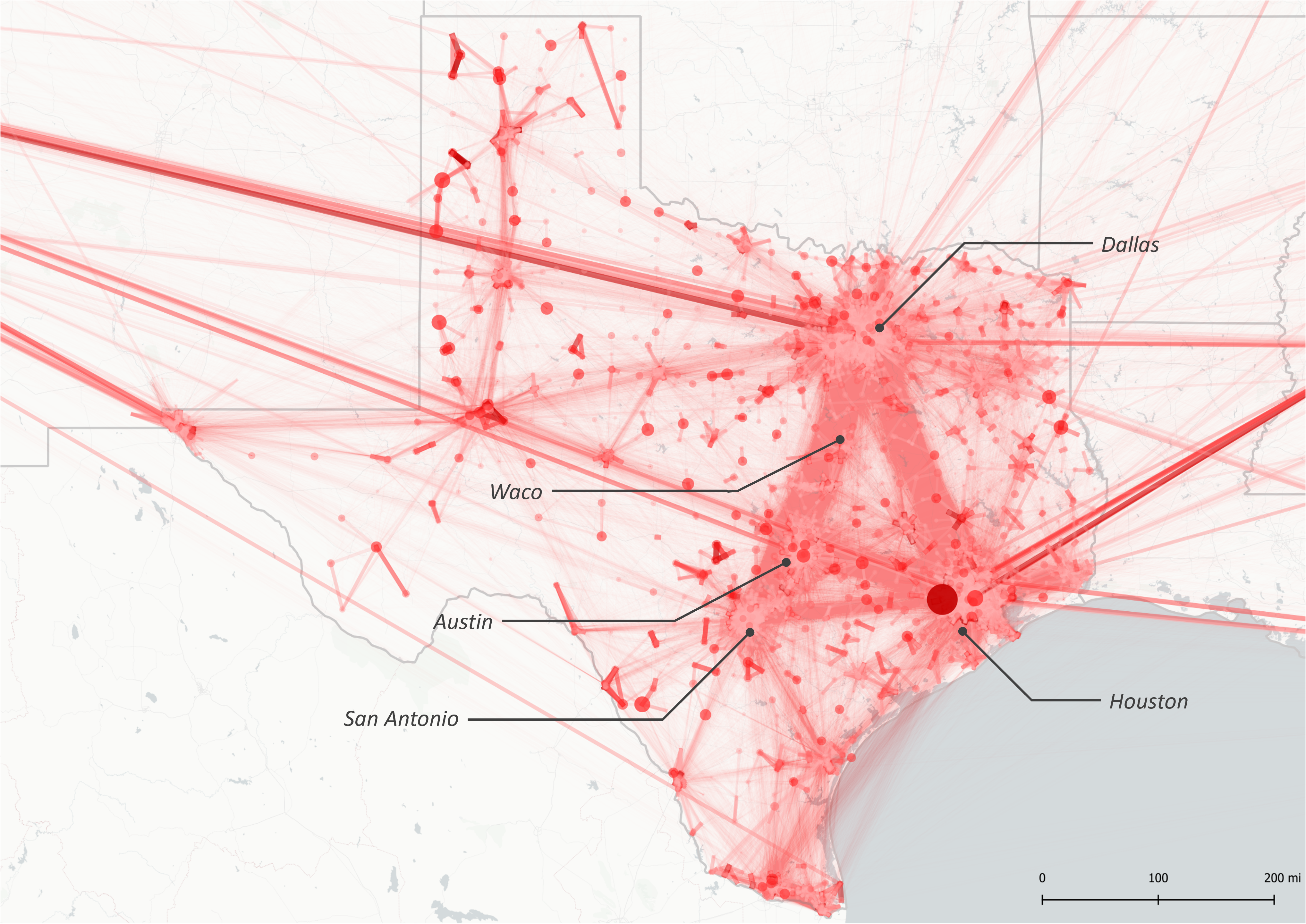
Systematica supported local authorities and stakeholders in planning and managing mobility, access, and crowd flows associated with the installation, ensuring safe and efficient movement across land and water while minimizing disruption to the existing transport system.
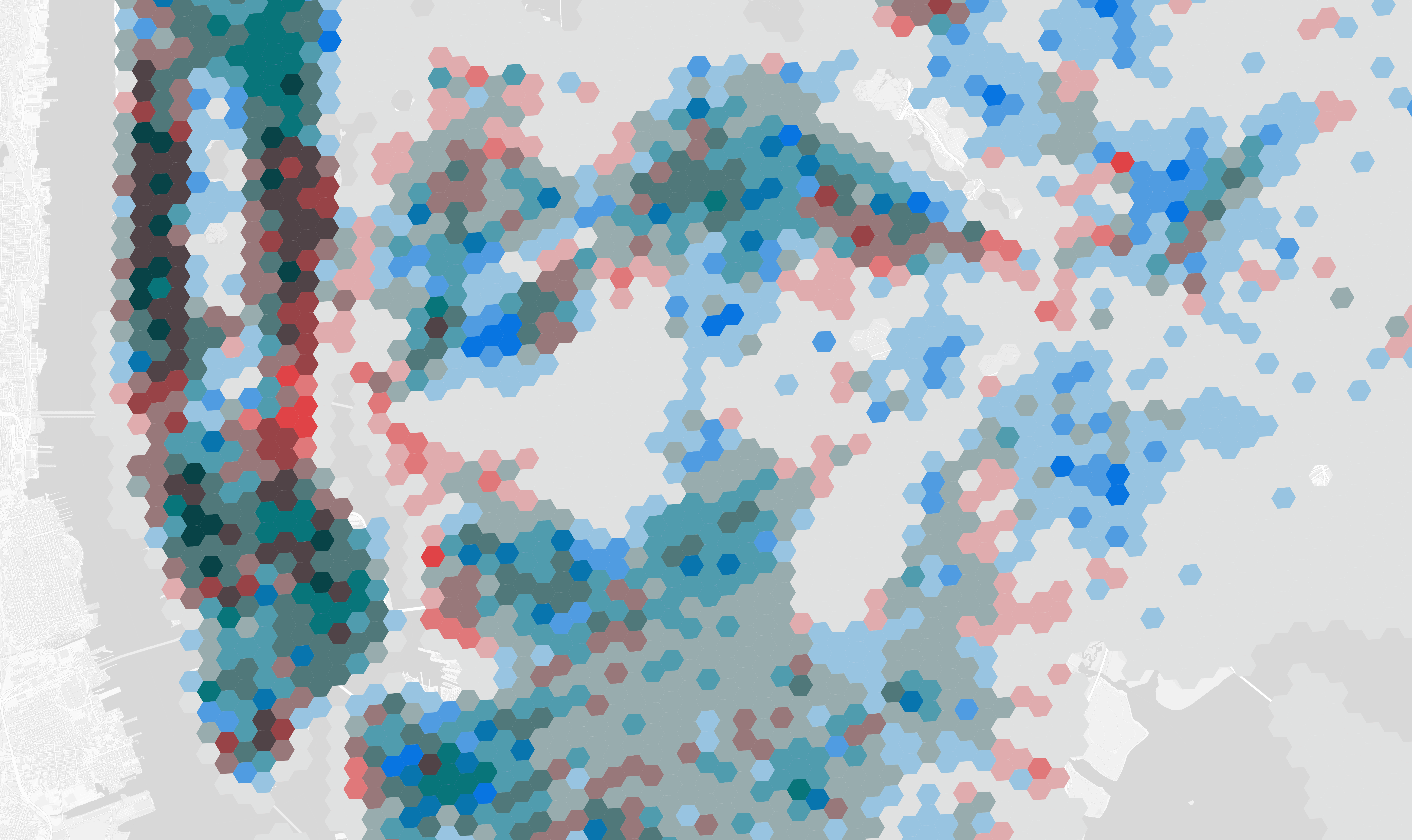
Systematica developed an integrated mobility strategy combining transport planning, pedestrian flow analysis and operational coordination. The work focused on managing large, fluctuating visitor volumes, redefining access hierarchies, and organizing intermodal connections between rail, road, ferry services and pedestrian routes.
Scenarios were tested to assess peak demand, critical nodes and evacuation conditions, while temporary measures were designed to adapt existing infrastructure without permanent alterations. Close coordination with public authorities ensured alignment between mobility planning, security protocols and event operations.
The project delivered a comprehensive mobility and crowd management framework, including access strategies, pedestrian routing, transport service coordination and operational guidelines. The system enabled the safe movement of over one million visitors while preserving local accessibility and ensuring the smooth operation of the installation throughout its duration. The Floating Piers stands as a benchmark for managing large-scale cultural events in constrained environments, demonstrating how mobility planning can support extraordinary public experiences without long-term infrastructural impact.
Ridge Hill is a mixed-use development in Yonkers, New York, mainly focused on retail and land office use. Supporting Sherwood Design Engineers, we contributed to the masterplan for its regeneration, introducing new residential and cultural uses. We designed a pedestrian-friendly circulation system and a phased parking strategy, using distributed underground parking to create a more accessible district where all key destinations are within a 5-minute walk.