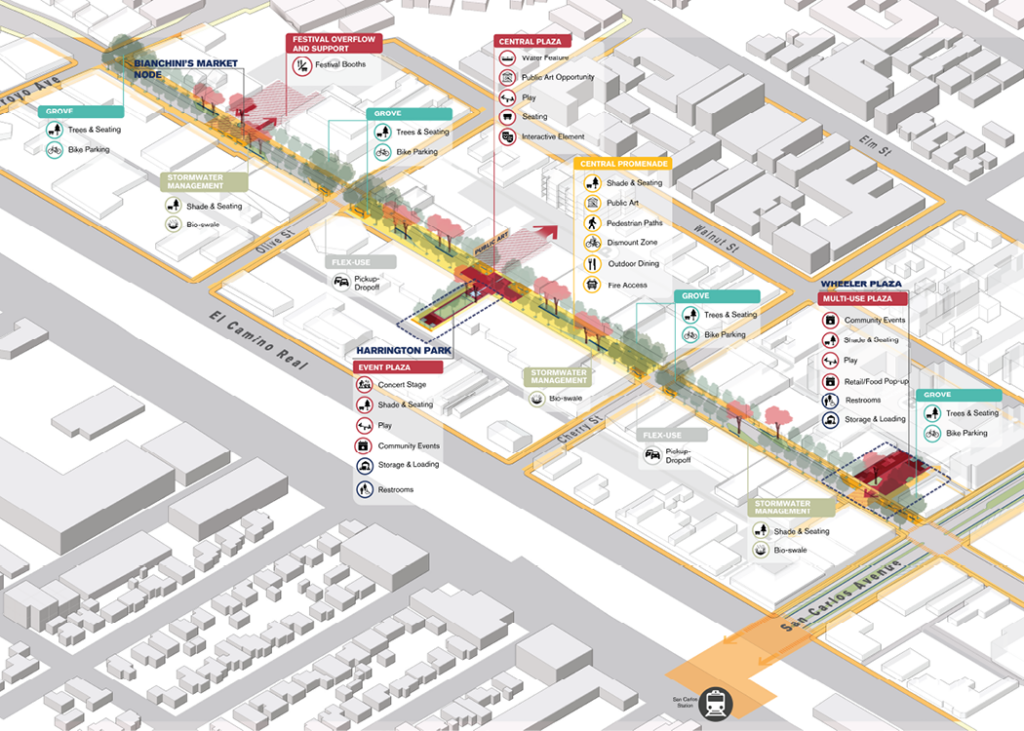
Revitalizing Downtown San Carlos through data-driven mobility planning and multimodal simulations

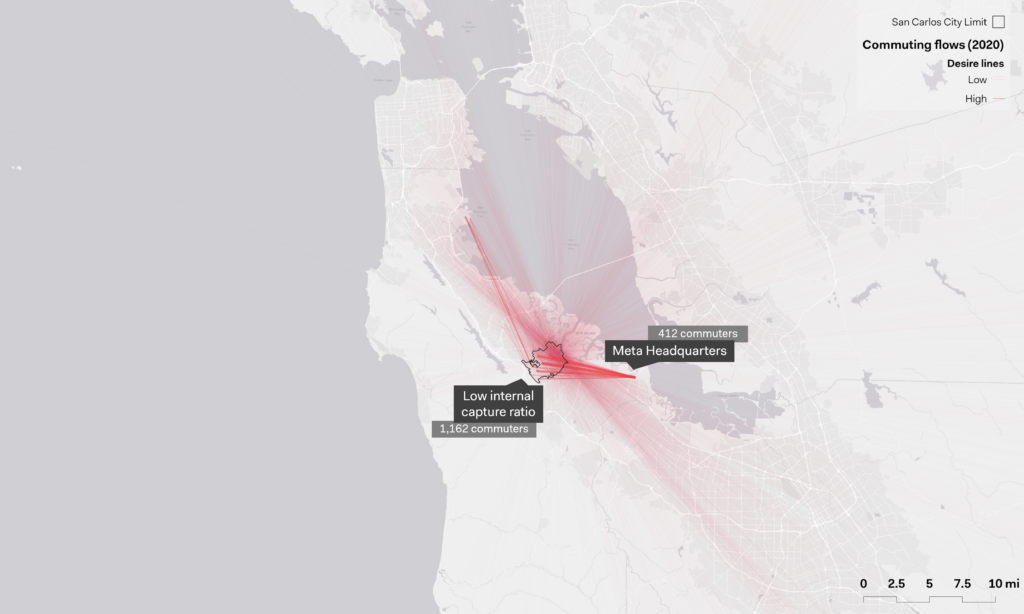
Located between San Francisco and San Jose, the City of San Carlos (San Mateo County, California) occupies a strategic position within one of the most dynamic urban corridors in the United States. Shaped by the presence of the US-101 corridor and the Caltrain network, the city’s mobility patterns are closely connected to regional travel flows, employment centers, and evolving urban development trends.
As part of the Downtown Specific Plan and Downtown Streetscape Master Plan process launched in 2023, San Carlos set out to create a more vibrant, accessible, and economically resilient downtown district. A key challenge was balancing continued growth with the need to reduce car dependency.
The vision required a multimodal downtown environment where walking, cycling, public transport, and shared mobility play a greater role in supporting community life, local businesses, and long-term sustainability.
Systematica was invited by WRT to join the multidisciplinary team. Our role was to develop the mobility strategy supporting the Downtown Specific Plan and to provide advanced modelling tools, in particular microsimulations dynamic models, for testing future design scenarios.
Systematica’s approach combined evidence-based analysis, advanced mobility modelling, and engagement with San Carlos’ community and stakeholders.
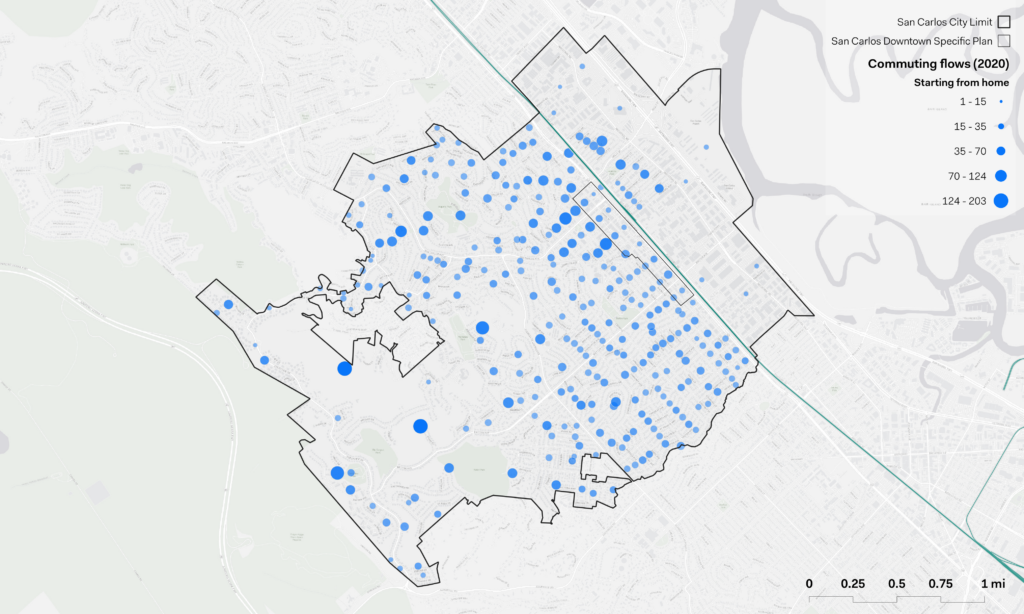
The study began with an assessment of demographic trends, travel behavior, and regional mobility patterns. The goal was to determine how residents, workers, visitors, and commuters interact with downtown San Carlos and surrounding communities.

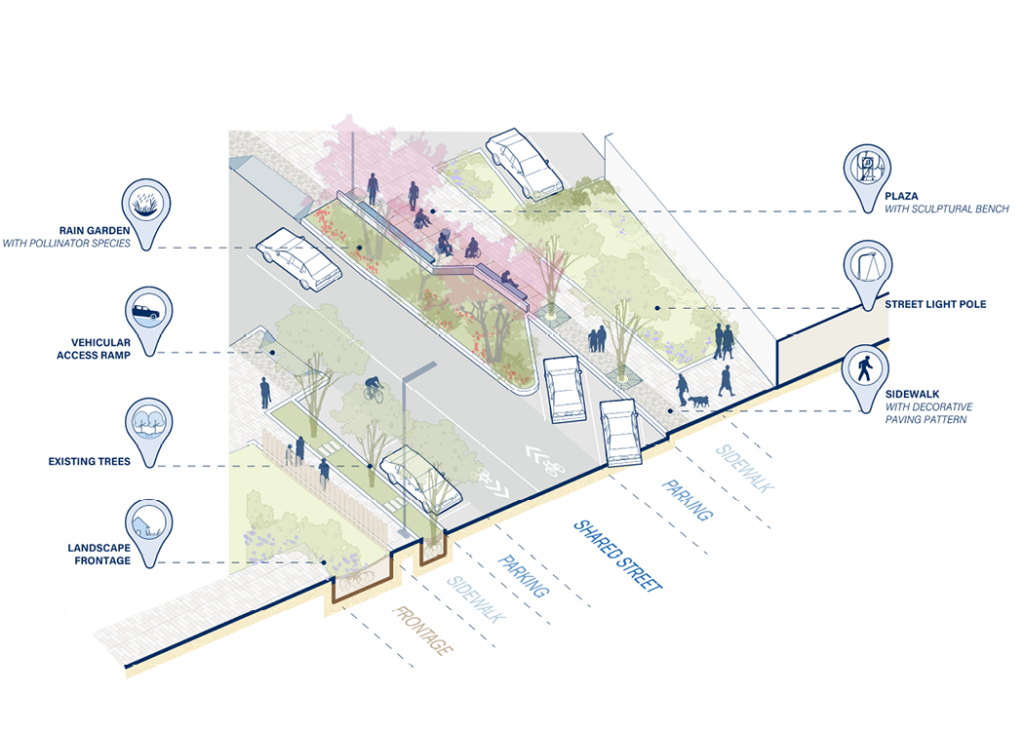
To guide street design, Systematica prepared a comprehensive set of complete streets guidelines, incorporating international best practices, benchmark case studies, and local traffic survey data. These guidelines informed the development of a mobility strategy prioritizing safety, accessibility, sustainability, and resilience.
To validate proposed interventions, Systematica developed a multimodal dynamic microsimulation model capable of testing existing and future scenarios. The model evaluated key performance indicators including vehicle speeds, intersection operations, signal delays, and Level of Service (LOS), ensuring that proposed changes would improve network performance while supporting a more walkable and people-oriented downtown environment.
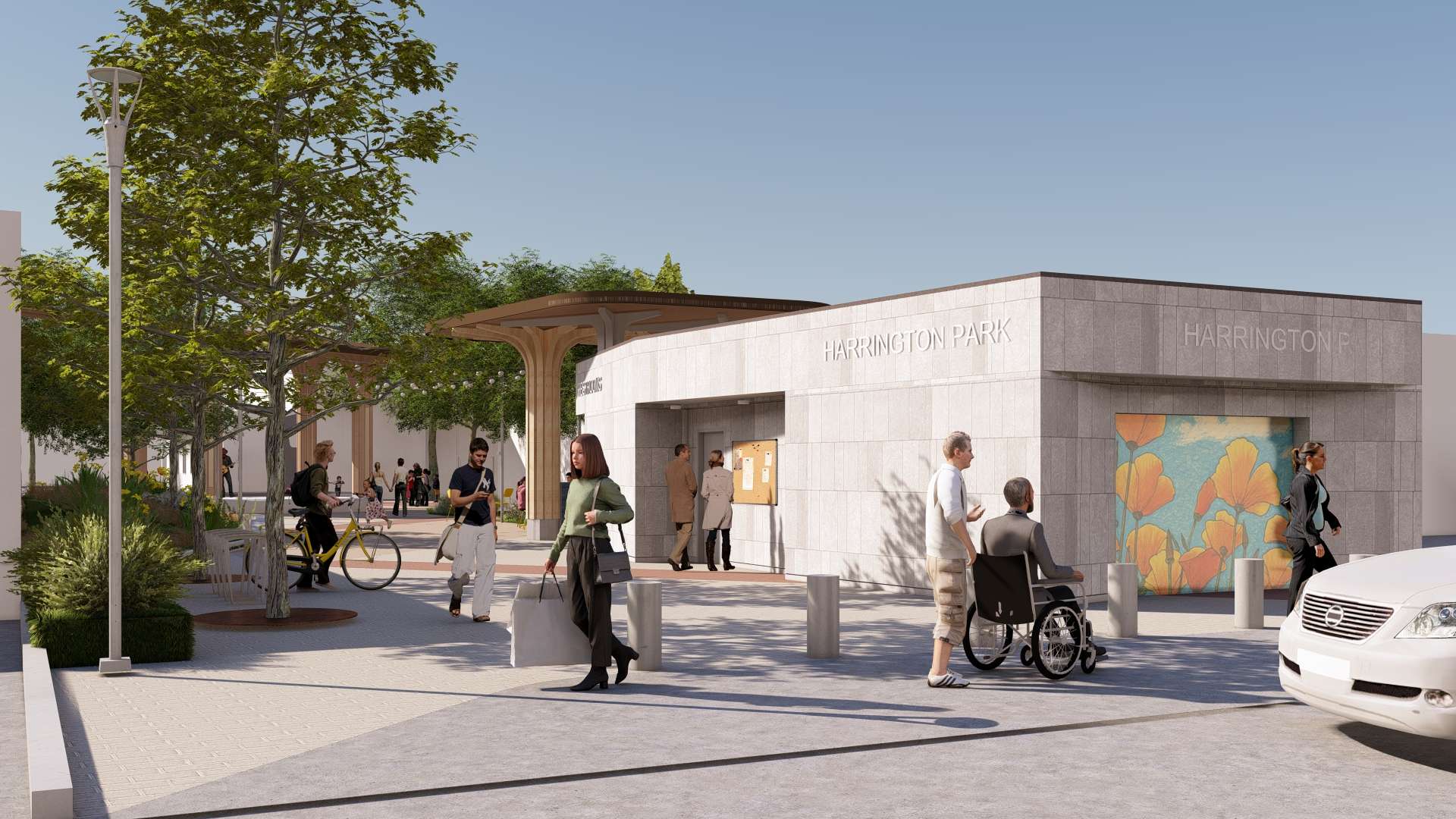
From the parkway-inspired redesign of Laurel Street to the creation of more welcoming pedestrian environments, the plan establishes a clear roadmap for delivering a healthier, more sustainable, and economically competitive downtown district.
Systematica’s key outcomes include:
- A multimodal framework supporting reduced car dependency and increased use of active mobility and sustainable transport modes;
- Complete streets guidelines informing future public realm and streetscape improvements;
- Dynamic microsimulation models validating the performance of proposed interventions;
- User-centered planning tools that strengthened stakeholder engagement.
With phased implementation beginning in 2025, the project provides a long-term framework for enhancing mobility, improving public space quality, and reinforcing San Carlos as a model for people-centered urban development in the greater Bay Area.